


Hydraulic torque tools for critical industrial bolting
Hydraulic torque tools are high-precision bolting systems used to apply controlled torque to critical fasteners in industries such as oil & gas, mining, power generation. They are designed for high-load joints, limited access conditions, and applications where accuracy, repeatability, and safety are critical.
Chicago Pneumatic hydraulic torque tools support maintenance teams working under pressure - during shutdowns, field operations, and heavy-duty industrial maintenance - where getting the joint right the first time is essential.
This hydraulic range is part of Chicago Pneumatic’s broader industrial bolting offer, backed by expert guidance, spare parts availability, and service support.


One Bolting Portfolio. Infinite Applications.
Why Choose Hydraulic Bolting?
Hydraulic torque tools are designed for applications where access constraints, load requirements, and repeatable tightening are critical. They are typically selected for downtime‑critical operations - especially during planned maintenance - where precise load transfer and technical fit matter most.
Built for real industrial maintenance conditions
Hydraulic torque tools are selected when:
- torque demand exceeds conventional tools
- access around the fastener is limited
- downtime is costly and scheduled work must be executed efficiently
- joints are critical for safety and performance
- repeatable and controlled tightening is required
They are widely used in planned maintenance, outage operations, and installation work across heavy industries.
Critical bolting, wherever it gets tough.
Why maintenance teams use Chicago Pneumatic hydraulic torque tools?

Safe and Ergonomic
Retained reaction arm for safer work at height adjustable handle for improved ergonomics

High-Torque Capability
Up to 70,000 Nm for heavy duty applications

High Accuracy
±3% torque for controlled and repeatable tightening

Compatibility
Common twin port interface compatible with major hydraulic systems

Faster Maintenance
Easy access to swivels to reduce downtime

Complete Range
Extensive range covering a wide variety of applications
Which hydraulic torque wrench do I need?
Selection is usually driven by access, torque requirement, and the working window around the fastener.
Square Drive vs Low Profile - Quick Selection Guide
Chicago Pneumatic hydraulic torque tools are available in square drive and low‑profile designs. Square drive models use standard sockets for robust tightening and break‑out, while low‑profile drive units with interchangeable links/cassettes are built to reach restricted working envelope.
| Tool type | Best for | Why choose it? |
| Square drive | General maintenance, breakout | Versatile and robust. Standard sockets. |
| Low-profile | Tight access, flange bolting | Compact, fits restricted spaces. Interchangeable links/cassettes. |
THL Powerhead and TR Ratchet links series - Low profile torque wrench
THS Square drive hydraulic torque tools series - Square drive torque wrench
High torque tightening solutions for heavy industry


Chicago Pneumatic hydraulic torque wrench pumps - Build the right system
Chicago Pneumatic hydraulic torque wrench pumps are available in electric and air‑driven configurations, with compact and medium‑capacity options and single‑ or multi‑port manifolds to adapt to job constraints. Choose electric pumps for sites with reliable power and pneumatic pumps where electricity is restricted or unavailable.
| Pump type | Why choose it? | Typical applications |
| Electric hydraulic pumps | High performance, faster operation, consistent torque output, ideal for repetitive bolting | Power plants, workshops, manufacturing, wind turbine assembly |
| Pneumatic hydraulic pumps | No electrical risk, works with compressed air, safer for hazardous environments | Oil & gas, offshore platforms, petrochemical sites |
Hydraulic torque wrench pump overview
ETQ - Hydraulic torque Electric pump
ATQ - Hydraulic torque Pneumatic pump
Applications by Industry
Hydraulic bolting tools are widely used where safety and joint integrity matter in harsh conditions and critical maintenance windows

Oil & Gas / Petrochemicals
Pipeline flanges, heat exchangers, reactors, pressure vessels, pumps, valves; unplanned outage maintenance.
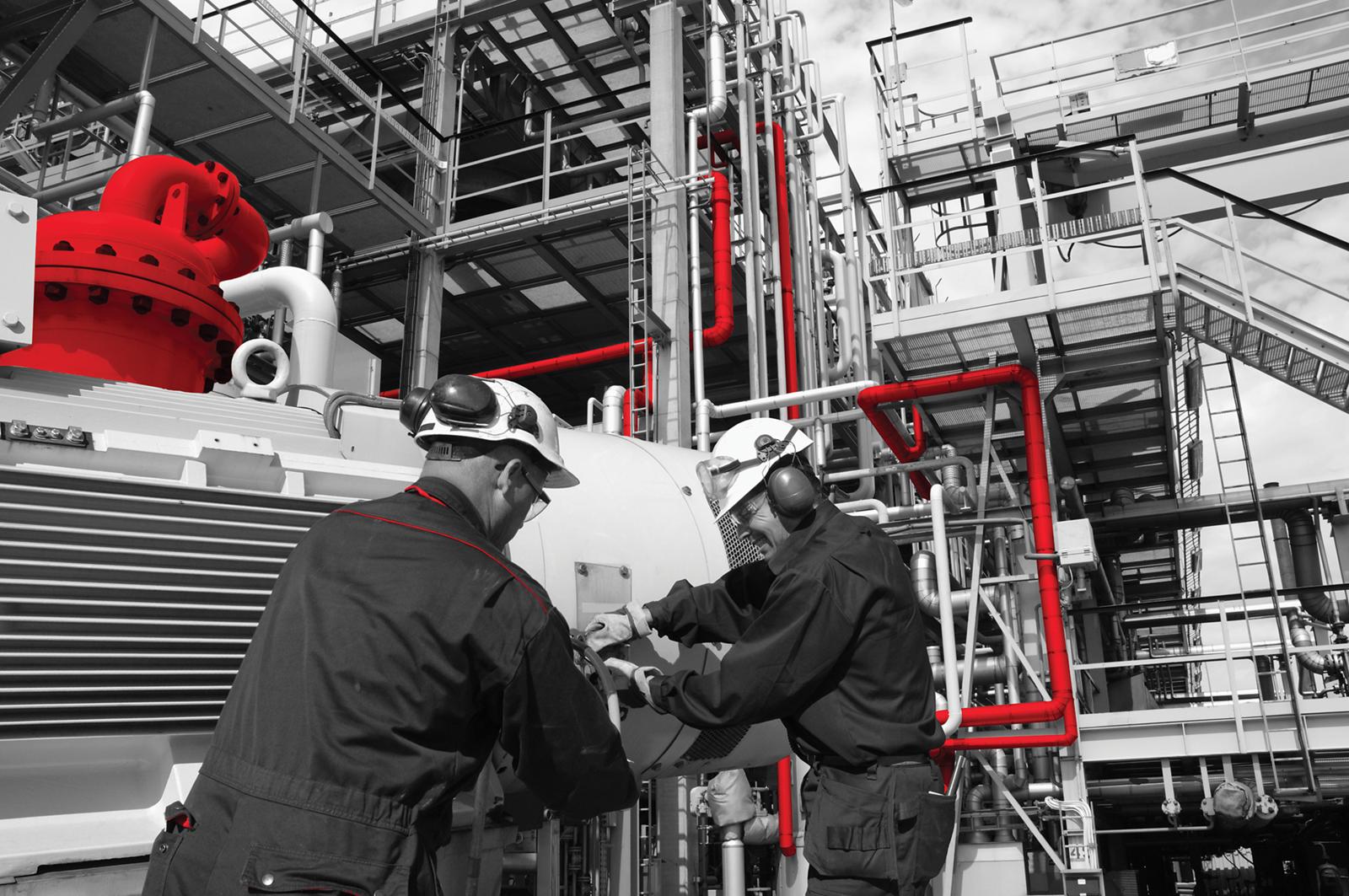
Power Generation
Turbine casings, heat exchangers, steam valves, high‑pressure flanges, generators.

Mining
Crushers, mills, conveyors, drum/pulley hubs, haul truck wheel studs, slewing bearings.

Wind Energy
Tower flanges, blade bolts and pillow blocks.

During installation, time‑sensitive maintenance windows, customers and distributors benefit from:
Frequently Asked Questions - Hydraulic Bolting Tools
What is a hydraulic torque wrench used for?
Hydraulic torque wrenches are used to apply controlled torque in applications requiring high torque and repeatable tightening, especially when access is limited and joint integrity is critical. They are commonly applied on pipelines, pressure vessels, and heavy equipment where manual or pneumatic tools cannot deliver sufficient torque or accuracy.
When should I choose a low‑profile wrench instead of square drive?
Low‑profile drive units with interchangeable links/cassettes are designed to reach tight clearances where access is limited, while square drive tools use standard sockets for robust tightening and break‑out.
Do I need an electric pump or a pneumatic pump?
Electric pumps and pneumatic pumps are both available; pneumatic pumps are designed for environments where electricity isn’t available or permitted. Both are rated for 700 bar (10,000 psi).
Can hydraulic tools integrate into existing fleets?
Chicago Pneumatic hydraulic systems are designed to integrate into existing maintenance environments and support common hydraulic interfaces used in the field.